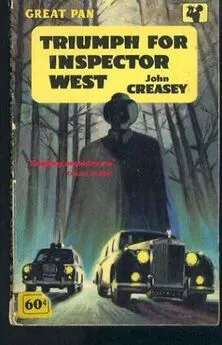
John Creasey - Gideon’s Sport
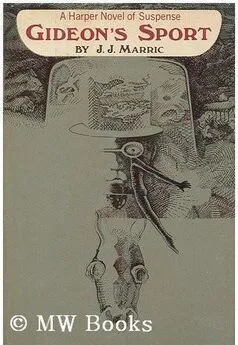
- Название:Gideon’s Sport
- Автор:
- Жанр:
- Издательство:неизвестно
- Год:неизвестен
- ISBN:нет данных
- Рейтинг:
- Избранное:Добавить в избранное
-
Отзывы:
-
Ваша оценка:
John Creasey - Gideon’s Sport краткое содержание
Gideon’s Sport - читать онлайн бесплатно полную версию (весь текст целиком)
Интервал:
Закладка:
As Londoners went home, that evening-in buses, tube, trains and private cars which jammed the main arteries until it was a miracle that traffic moved at all — it was almost too hot to move, too hot to breathe. The sultry stillness intensified; the stench of exhaust fumes made it far, far worse. Tens of thousands, the men in shirt-sleeves, the women in summer dresses, walked part of the way through the parks — London’s ‘lungs’ — but the air was little better even there. Nearly everyone, regardless of age, was listless and tired and could easily have become bad-tempered. The traffic police had special permission to discard their tunics and in their pale, grey-blue shirts and elbow-length white cuffs, patiently directed traffic so badly-congested that one feared it could never move.
It did move, although with agonising slowness, and sooner or later the weary Londoners managed to get home. Some to tiny apartments; some to luxurious flats; some to mean little houses whose front doors opened direct on to the pavements of narrow streets; some to the nearer suburbs, with their smooth, green lawns and gardens of flowers at the front and of vegetables at the back. Beyond these, in the dormitory suburbs, the bigger houses stood in spacious, well-kept grounds and parkland. There were many new estates of expensively priced houses as well as the high-rise apartment blocks overlooking parkland or commons. All of these were as near to the truly rural as one could hope to get, while still being virtually ‘in’ a city of near nine million human beings.
Not unnaturally, by far the greater majority of those home-going Londoners were honest. But as the law of averages would lead one to expect, some made their living by crime.
One of these, who was much more thorough, much more efficient, much more wealthy than her closest intimates dreamed or even the police suspected, was Martha ‘Aunty’ Triggett. And Martha Triggett thrived on crowds and sporting events.
Martha Triggett had a husband, a small and self-effacing man named Edward, who was a clerk at a betting-shop. Martha, who was also small, though plump, was anything but self-effacing. A most gregarious soul, who loved the limelight and loved company, she had worked up a nice little business: one ‘school’ for beauticians and women’s hair stylists, and another for hairdressers for men. She gave each a month’s training, good training as far as it went, then sent them out to get jobs in a London hard-pressed for hairdressers of either sex.
She also ran another ‘school’ in conjunction with these two: a school for bag-snatchers and pick-pockets, who became remarkably skilled at their jobs. She called this the Charm School. Aunty, if asked, could not explain precisely how this school had begun; although under pressure she made many brave attempts, offering remarkable variations on how she had seen what a good thing the Charm School could become. There were, however, two things, one a phrase and one a theme, common to all the variations.
“Oh, my dear,” she would say, her bright blue eyes lighting up, “it was a stroke of genius. I have to admit it was a stroke of genius?’ With which she would puff out her pigeon bosom and tuck away imaginary loose strands of her immaculate mass of gold-blonde hair-it had not changed colour in twenty years — and accept the exclamations, the awe, the congratulations of her listeners.
And, sooner or later, she would say: “Of course, I never influenced anybody to be bad-not even in the early days of the Charm School. If a person wants to be strictly honest, I always say, let them! But the truth is, dears, not everybody is honest. In fact —” she would survey her pupils with a wicked gleam in her eye, and go on: “It’s not so very hard to sort the wheat from the chaff, I can tell you! But it started by accident, really — I left a purse out one day and a light-fingered little basket had a pound note out of it in no time. I sent him home with a flea in his ear, I can tell you.”
All her listeners would laugh dutifully, until she had gathered enough acclaim, whereat she would break through the laughter in her throaty voice: “Then I left odd money about and watched what happened. Those who brought it to me got a toffee or a fag — as a reward, see. Those who kept it-well, just you imagine! There was one-he’s still on the game today and never been caught: no names, no packdrill, mind. He was a proper marvel. I went to see his Pa, and believe you me his Pa was a real old pro — been at it all his life, he had, and taught all his kids before they were breeched. He was that smart I Only had to go out once or twice a week, he did — and now, his kids keep him in luxury. Well, then: you’re all apprentices here, and you’ve got to learn the techniques and there’s no better way than pictures . . . ” •
Aunty would roll down a small screen and show coloured pictures of her graduates working among crowds.
“Sporting crowds are by far the best,” she would go on. “They get so excited that even after the game they’re so worked up they couldn’t tell if you was picking their pocket or giving them a bit of you-know-what!”
This particular sally was always received with a tremendous gust of laughter, but the film which followed was watched with rapt attention. The viewers would see small figures moving among the crowds; lifting jackets, slipping hands in pockets, even cutting rear pockets with a razor blade to catch the wallet as it fell out. And there were the girls who opened and rifled handbags while women were talking to each other. There were shopping scenes, too, in the big Knightsbridge stores and in Oxford and Regent Streets as well as the suburban shopping centres, where girls were particularly active.
“If a girl’s seen carrying two handbags, no one’s all that surprised,” Aunty would say. “But if a boy’s caught with just one, he’ll be in the nick before the night’s out.”
There were other pictures: close-ups of experts at ‘practice’, close-ups of the moment of discovery; little tricks such as treading on a victim’s toe or passing the loot to an accomplice, then facing an accusation with an air of injured innocence. Nothing was omitted. And over the years, Aunty Martha Triggett had built up a remarkable organisation, so that nothing at all was wasted. She had sales outlets for stolen bags and purses, the powder-compacts and other make-up paraphernalia that went in them, watches, pens, pencils-for the cigarette-cases and lighters, trinkets and even key-rings and used combs. She had been doing this for so long, without being caught and as far as she knew without being suspected, that she no longer had any sense of danger.
“Do what you’re told,” she would say to her pupils, “and nobody’s ever going to catch you.”
What she longed for most was a long, hot summer. Fingers were chilled in winter and the pickings weren’t so good. This summer so far had been very successful, and she had great hopes for June . . .
There was in fact one man, a young policeman, who had suspicions about Aunty Martha Triggett. His name was Donaldson, Bob Donaldson, and he had been in the Force for only thirteen months. Before that, he had been in a number of jobs, including men’s hairdressing: he had been a pupil of Aunty Martha’s School and knew that a Charm School existed without knowing just what it was. He was at that time stationed in Wimbledon, in the south-west, and Martha Triggett operated from Stepney, in the southeast. Donaldson, not only young but very alert, wondered about her occasionally. But it was no use speculating aloud to a station sergeant, so he kept his suspicions to himself.
Not only the police and Aunty Martha were preparing for June’s great sporting events; the bookmakers were expecting to be very busy. The volume of betting on cricket, tennis and golf was negligible, of course, compared with the amount on racing, boxing, the speedways and the dogs. But there were very good pickings and the big bookmakers always quoted prices on the major events.
There were some surprising odds offered and taken, for instance, on the best players at Wimbledon, who were ‘seeded’ so that they could not be drawn against each other in the early rounds of the tournament. This year, there was more betting than usual; partly because of the big money prizes which put the professionals high among the seeded players, yet gave amateurs a powerful incentive to win. There were also prices, fairly even, on who would win the cricket series between South Africa and England by winning most matches out of five.
There were hundreds of small bookmakers in London, but only three major houses. Of these, Jackie Spratt’s was a law unto itself. The others were wholly reputable and trustworthy, despite rumours that they would ‘fix’ this fight or that race. It wasn’t simply that bookmakers were as honest as any other businessmen; it was that they were particularly vulnerable to any rumours of dishonesty or fixing. The police knew this as well as anybody, and since the new Gaming Act had come into force and betting was easier to conduct legally, a camaraderie had been built up between the police and the bookmakers as individuals, as well as through their main association.
On that particular evening, while Gideon was sitting in his Fulham garden, trying to get cool, and Martha Triggett had cancelled a Charm School session because it was so hot, two of the Big Three bookmakers sat on the terrace of the Royal Automobile Club, drinking cold beer.
One, Sir Arthur Filby, was tall, handsome, grey-haired and aristocratic in appearance. The other, Archibald Smith, looked the prototype of the typical musical comedy bookmaker-big, overweight, red-faced and with a neck so thick that there were always two rolls of fat at the back, lurking above his invariably over-loud, over-check suit. His grey hair was cut so short that at a distance he appeared almost bald; at close quarters, it bristled.
“We had an odd one in, today,” he remarked, owlishly.
“Concerned with what?” asked Filby.
“Barnaby Rudge.”
“The tennis chap, you mean?”
“The darkie,” Smith nodded, “from Alabama.”
“What’s so odd about him?” Filby queried, blankly.
“Didn’t say odd about him, old boy! An odd one about him. Ten thousand pounds on any odds the chap could get, that Rudge will win Wimbledon.”
“Take it!” urged Filby, promptly. “He hasn’t an earthly. Even at a hundred to one, you’d pick up ten thou. Want to hedge some of it?”
“I want to know more about it.” Smith’s deep-set, periwinkle-blue eyes had a speculative glint. “I checked around a bit. No one else has been approached. The general feeling was a hundred to one others — and he’s one of them!”
“Humph,” ejaculated Filby.
“And if he won,” Smith pointed out, “someone would be a million down!”
Filby sat up, contemplated his glass as if suspicious of its cleanliness, and then looked hard at Smith.
“I see what you mean,” he said. “Impossible.”
“A pony,” Smith shrugged. “Even a hundred. Possibly a thousand quid — I could understand anyone putting it on as a long shot. But ten thousand! That isn’t chicken-feed, even to a millionaire.”
Filby sipped, stared moodily at his glass, tossed the drink down and raised a hand for a waiter.
“Who’s behind it?” he asked.
“I’ve no idea.”
“No name? Same again, by the way?”
“Ta. I can manage one more.”
Filby raised two fingers and as the waiter turned and went off, he echoed: “No idea?”‘
“Oh, I know who wants to put the money up.”
“Cash?”
“You’re not very bright tonight, old boy!” Smith protested. “You don’t think anyone would be expected to take that on credit, do you?”
Читать дальшеИнтервал:
Закладка: